06 Jan 2026

The Government has published the provisional local government finance settlement for 2026/27, outlining planned funding allocations for local authorities in England and launching a statutory consultation on its proposals. While the final figures are still subject to confirmation through this consultation process, our early analysis suggests the settlement could have significant implications for rural councils and the communities they serve.
Emerging Funding Disparities
Based on our initial assessments of the provisional settlement comparing the most rural councils to the most urban councils:
- The most urban councils are expected to receive around 41% more per head in Government-funded spending power than the most rural councils in 2026/27.
- In 2026/27, residents in the most rural areas are projected to pay around 20% more in council tax on average than the most urban residents.
- By 2028/29, the most urban authorities’ spending power is expected to allow them to spend around £100 more per resident on services than the most rural councils.
- Between 2024/25 and 2028/29, Government-funded spending power for the most urban authorities is estimated to rise by around 21%, compared with around 1% for the most rural councils.
- By 2028/29, these changes would result in the most urban councils having around 8% more overall spending power than the most rural councils.
These figures remain subject to confirmation, but mirror concerns raised by many rural authorities about funding growth that fails to reflect rural cost pressures.
Government Consultation — A Key Part Of The Process
The Government’s provisional settlement has been published alongside a formal consultation inviting views on the proposals for the local government finance settlement for 2026/27.
- The consultation sets out the Government’s draft proposals for how funding will be distributed, including revenue support grant, business rates shares and council tax referendum principles, and forms part of the legislative process leading up to the final settlement.
- This is the first multi-year settlement in a decade, covering 2026/27 through 2028/29, and the consultation runs until 14 January 2026.
The consultation on the provisional settlement is a critical opportunity to get this right. Rural councils have been underfunded for decades, and the data is clear that current funding formulas do not fully capture rural need. RSN will be responding to the consultation and urging government to rethink how it defines need, measures cost, and allocates funding, because national renewal will only succeed if it reaches every community, not just the most visible ones.

Rural authorities typically serve older populations, cover larger geographic areas, face higher per-unit costs for services such as adult social care, highways maintenance and waste collection, and have less flexibility to raise additional income, meaning greater reliance on council tax to sustain essential services. These structural pressures are often not fully recognised in national funding formulas.
Member Council Responses
Several RSN member councils have already spoken out about the provisional settlement:
- Herefordshire Council expressed serious concern over the provisional settlement, warning that changes to the government’s funding formula could leave a budget gap of up to £30 million in 2026/27. The council said the proposals fail to reflect the higher costs of delivering services across a rural county, and that even maximum council tax rises would not close the gap.
- Shropshire Council warned that the proposals risk further disadvantaging rural areas, highlighting the cumulative impact of settlements that do not reflect the higher costs of delivering services in sparsely populated communities.
- Suffolk County Council said it was “deeply disappointed” by the provisional settlement, stating that its current understanding of the figures leaves the council facing a £6m budget gap, around £3.5m worse than previously forecast, despite headline claims of increased funding.
- Devon County Council said that claims of a significant funding increase were misleading, warning that the settlement shifts more of the financial burden onto council tax payers rather than providing genuine additional government support.
- Northumberland County Council said that while the provisional settlement indicates a modest increase in funding, much of this would need to be raised through council tax, rather than additional government grant. The council warned that ongoing cost pressures and the higher costs of delivering services across a large, rural area are not fully reflected in the proposed funding arrangements.
- Westmorland and Furness Council questioned whether the allocation adequately reflects the true cost of delivering services across large rural and remote geographies.
- North Lincolnshire Council said the settlement amounted to a real-terms reduction, arguing that while government presents the figures as an increase, councils are being left to rely more heavily on local taxpayers to balance budgets.
- Durham County Council told the BBC that although the settlement could provide additional funding, rising statutory pressures, particularly in children’s services, would outweigh any gains. Deputy leader Darren Grimes said that a single year’s increase in children’s care costs would already exceed the council’s projected annual funding uplift.
Wider Sector Responses
National representative bodies have also reacted:
- The Local Government Association emphasised ongoing financial pressures across councils.
- The County Councils Network highlighted the disproportionate impact on county and rural authorities.
- The Local Government Information Unit urged careful scrutiny of redistribution impacts.
- The Institute for Fiscal Studies noted the settlement’s redistribution towards more urban and deprived councils, reflecting wider changes in funding formulas.
Looking Ahead
The provisional settlement and consultation represent an important stage in setting local government funding for the next three years. RSN will continue to monitor developments, support members through the consultation process, and advocate for fair and sustainable funding arrangements that reflect the true cost of delivering services in rural communities.
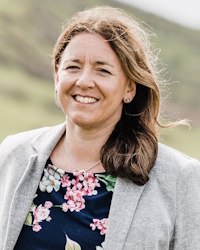 |
Kerry Booth, Chief Executive, Rural Services Network:
|