
02 May 2026
As millions of people head to the coast and countryside this Bank Holiday weekend, rural England will once again be seen at its very best – beautiful landscapes, vibrant communities, and places people actively choose to spend their time.
But behind that picture lies a more complex reality.
For too long, rural areas have been perceived as universally affluent, places that are “doing fine” and therefore don’t require the same attention as urban centres. It’s a narrative that persists in national policy, masking the very real challenges faced by those who live and work in these communities every day.
Recent research from the Rural Services Network, drawing on the views of more than 2,400 rural residents, tells a different story. It highlights communities under growing pressure, not because they lack potential, but because that potential is too often overlooked.
The Perception Gap
On the surface, rural areas can appear prosperous. Employment levels may look strong, and the natural environment can give an impression of wellbeing.
However, this often hides a more difficult truth.
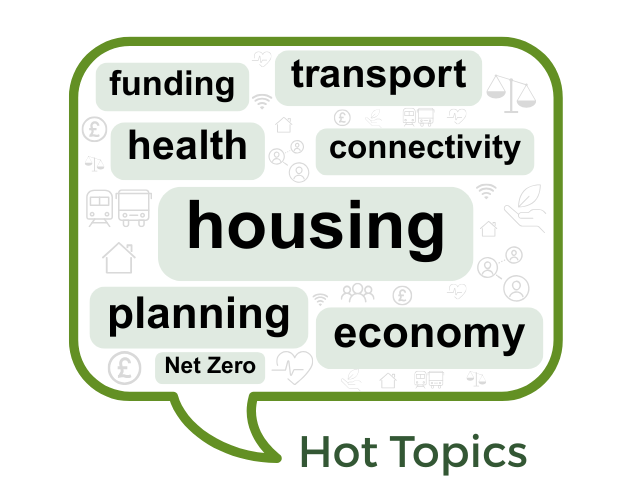
Lower average wages, higher living costs, and limited access to services create a very different lived experience. Housing affordability is stretched, transport options are limited, and digital connectivity remains inconsistent.
These are not isolated issues, they are deeply interconnected challenges that shape everyday life.
As highlighted in our Delivering for All roadmap, national metrics often fail to capture this reality, relying on models better suited to urban contexts and overlooking the nuance of rural life.
Feeling Forgotten In National Policy
One of the clearest messages from rural residents is a sense of being overlooked.
Policies designed at a national level often default to a “one-size-fits-all” approach, without recognising the additional cost and complexity of delivering services across dispersed populations. The result is a system where rural communities can end up paying more while receiving less.
This isn’t just about funding, it’s about visibility.
When rural challenges are not fully understood, they are less likely to be prioritised. And when they are not prioritised, the gap between perception and reality continues to widen.
The Funding Reality Behind The Rhetoric
This sense of being overlooked is not just a perception, it is reflected in how services are funded.
Recent RSN analysis of the Local Government Finance Settlement highlights a persistent imbalance. Government-funded spending power remains significantly higher in urban areas, while rural residents continue to contribute more locally to sustain services.
Over time, that gap is not closing, it is widening. Projections show urban funding increasing steadily, while rural allocations remain largely flat.
At the same time, the cost of delivering services in rural areas is inherently higher. Supporting dispersed populations, maintaining infrastructure across large geographies, and ensuring access to essential services all require additional resource, yet these factors are not consistently recognised in funding formulas.
The result is a system where rural communities are expected to do more with less, reinforcing the very challenges that national policy is trying to address.
A Story Of Untapped Potential
From small businesses and community enterprises to green industries and innovation, rural areas are already contributing significantly to the national economy.
Research by the The Rural Coalition shows that with the right policy framework, the rural economy could generate an additional £9–19 billion per year in tax revenues.
Rural and coastal areas are places of creativity and opportunity. They are places that can drive growth.
An Opportunity To Reflect And Refocus
Bank Holidays offer a moment to pause and appreciate rural England for what it is. But they are also be a moment to reflect on what it could be.
Because unlocking rural potential isn’t just about rural communities.
It’s about building a stronger, fairer future for the whole nation.