Institute of Economic Development
01 Dec 2025
Institute Of Economic Development Unveils 2025 Award Winners
The Institute of Economic Development (iED) has revealed the winners of its Annual Awards 2025 at a celebratory ceremony in Manchester. More than 150 delegates gathered in the Grand Ballroom...
Read more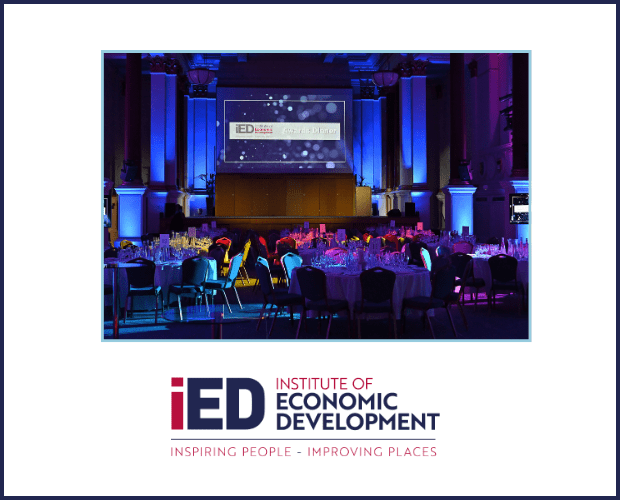
30 Sep 2025
Institute of Economic Development Announces Contenders for its 2025 Annual Awards Showcase
The shortlist for the iED Annual Awards 2025, which recognise achievers in the public and private sector through a series of individual, team and organisational categories, has been revealed by the...
Read more
04 Aug 2025
Anchoring Prosperity: Universities and Local Economies
A new report by the Institute of Economic Development (iED) and AtkinsRéalis “puts universities at the centre of the debate on how to generate growth in local and regional economies...
Read more
01 Jul 2025
Government Sets Out Industrial Vision
The Government has published a new Modern Industrial Strategy setting out its long-term vision for securing economic growth, increasing productivity, and fostering investment across priority sectors and regions of the...
Read more
12 May 2025
Early Bird tickets on sale for 2025 Annual Conference, and Annual Awards now open for entry
Early Bird registrations are now open for the 2025 Institute of Economic Development (iED) Annual Conference and Awards Dinner themed Good Growth: Driving the UK economy with investment in our...
Read more
14 Apr 2025
iED in Westminster
Baroness Taylor of Stevenage OBE, Parliamentary Under-Secretary of State for Housing and Local Government, joined around 90 delegates at the Institute of Economic Development (iED) House of Lords reception on...
Read more
13 Jan 2025
Economist And Journalist Stephanie Flanders Appointed Patron Of The Institute Of Economic Development
British economist and journalist Stephanie Flanders has been appointed as the new Patron of the Institute of Economic Development (IED). Stephanie, who is Head of Economics and Government at Bloomberg...
Read more
16 Dec 2024
New Appointments To The Institute Of Economic Development Board
Moe Forouzan, Team Manager – Business and Innovation at Blaenau Gwent County Borough Council, has been elected to the Board of the Institute of Economic Development (IED), the UK’s leading...
Read more
11 Nov 2024
Winners Of The Institute Of Economic Development Annual Awards 2024 Revealed
The winners of the Institute of Economic Development (IED) Annual Awards 2024 have been announced. At an Awards Dinner held in the Great Hall at BMA House in London last...
Read more
17 Jan 2022
Webinar series – Delivering Rural Economic Growth
This CPD module is intended to allow delegates to explore the key characteristics of rural economies and consider the most appropriate strategy they might follow in stimulating rural economic growth....
Read more